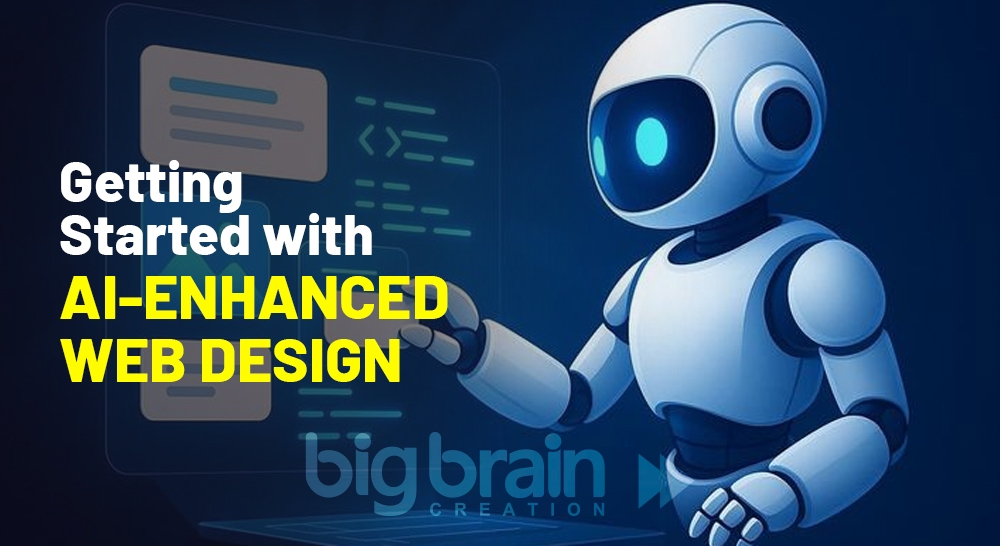

Getting Started with AI-Enhanced Web Design
Have you
ever wondered what web designers really wish for? Most would probably tell you
the same thing: a way to make building websites faster, smarter, and just…
easier.
Imagine
creating a full website in minutes, perfectly customized for your visitors,
without touching a single line of code. Ten years ago, that might have sounded
like a dream. But here we are in 2025, and AI is turning that dream into a
reality.
AI isn’t
just a buzzword—it’s changing the game. It helps designers work more
efficiently, create experiences that truly connect with users, and build
websites that can adapt and respond intelligently. The best part? You don’t
have to be a tech giant to take advantage of it. Today, businesses of all sizes
can leverage AI-powered tools to design professional, high-performing websites
faster and more affordably than ever before.
What Is
AI in Web Design?
Simply put,
AI in web design is all about using artificial intelligence and machine
learning to make building websites smarter and easier. Instead of spending
hours on repetitive tasks like coding, tweaking layouts, or analysing user
behaviour, AI tools can handle a lot of the heavy lifting for you.
From
generating content to predicting what your visitors want to see, AI helps
designers and developers work faster while still keeping the website
user-friendly and visually appealing. It’s like having a virtual assistant that
not only speeds up the process but also makes your website smarter and more
personalized for your audience.
Types of
AI in Web Design
AI isn’t
just one single tool—it’s a collection of smart technologies that each play a
different role in making websites better, faster, and more user-friendly.
Here’s a quick look at the main types:
1.
Machine Learning (ML): This is the part of AI that learns from data. It can analyse how
visitors interact with your website and suggest ways to personalize their
experience, like showing the right content to the right person at the right
time.
2.
Natural Language Processing (NLP): Ever chatted with a website bot that feels surprisingly
human? That’s NLP at work. It helps generate text, respond to visitors, and
create conversational experiences that feel natural.
3.
Computer Vision: AI
can “see” your website too. This technology helps with things like recognizing
images, automatically generating alt text, or improving accessibility so
everyone can navigate your site easily.
4.
Generative AI: The
creative side of AI. This tech can generate layouts, visuals, and even full
designs based on simple prompts, giving designers fresh ideas and speeding up
the creative process.
Together,
these AI tools take care of a lot of the repetitive, time-consuming work, while
giving designers the freedom to focus on creativity and strategy.
Benefits
of AI in Web Design: Why It Matters
AI isn’t
just a trend — it’s becoming one of the most valuable assets in modern web
design. Here\'s how it transforms the process:
1.
Automation of Repetitive Tasks
AI
dramatically reduces time spent on repetitive work such as layout adjustments,
code generation, or fixing minor errors. Tools like GitHub Copilot streamline
the coding process, allowing developers to focus on strategy and creativity
instead of routine work. The result? Faster turnaround times and fewer
mistakes.
2.
Personalized, Adaptive User Experiences
AI analyses
user behaviour and tailors’ content and layouts in real time. This makes
visitors feel understood and increases the chances of conversion. For example,
in e-commerce, AI can adjust product recommendations, search results, and even
page structures based on user actions — helping businesses deliver more
relevant experiences.
3.
Enhanced Website Performance
AI helps
improve speed, accessibility, and overall site performance. With data-backed
insights, it can detect slow-loading pages, broken links, and usability issues
before they impact visitors. Platforms like Wix Studio use AI to optimize
performance automatically, providing smoother browsing experiences.
4.
Expanded Creative Possibilities
Generative
AI tools like MidJourney unlock new creative directions by generating unique
imagery, design concepts, and visual elements instantly. Designers can
experiment faster, explore new ideas on the fly, and elevate the website’s
aesthetic with minimal manual effort.
5.
Reduced Costs and Faster Build Times
AI lowers
the barrier to professional website creation, making it more accessible for
small businesses and startups. Website builders like Squarespace and Wix allow
users to build polished websites without hiring full-time designers — and even
agencies benefit from faster, more efficient workflows.
How AI Is
Transforming Website Design: Key Use Cases
As of 2024,
around 36% of web designers use AI tools — and that number continues to grow.
Here’s how AI is being applied in real-world web design:
1. Design
Assistance & Automation
AI generates
design layouts, visuals, and even entire websites from simple prompts. Tools
like Visual Electric and MidJourney offer instant imagery and creative
inspiration. Meanwhile, platforms like Wix ADI can build complete website
structures within minutes, accelerating the design process significantly.
2.
Content Generation & Dynamic Personalization
AI helps
produce high-quality, SEO-friendly content through tools like Jasper. It also
tailors content automatically — platforms such as WordLift adjust text, product
listings, and visuals based on user data. This personalization makes users feel
like the website was made for them.
3. Code
Generation & Developer Support
AI-powered
coding assistants like Copilot provide snippet suggestions, fix errors, and
generate clean code structures. This empowers both seasoned developers and
beginners to build reliable websites with less complexity and fewer roadblocks.
4.
Smarter User Research & UX Optimization
AI analyses
user behaviour, predicts patterns, and uncovers friction points that impact
conversions. It also enhances accessibility through features like
auto-generated alt text, inclusive content suggestions, and optimized colour
contrast.
5. AI
Chatbots for Customer Interaction
Today’s
chatbots do more than answer FAQs — they provide personalized support, guide
navigation, manage transactions, and offer product suggestions. With
millennials using chatbots frequently, they are now essential for providing
real-time, 24/7 engagement.
6.
Performance Monitoring & Security Enhancement
AI tools
like New Relic track performance issues, detect anomalies, and suggest fixes
before users notice them. AI also strengthens security by detecting threats
early, making websites safer and more resilient.
7.
Smarter SEO & Marketing Automation
AI predicts
trends, suggests keywords, and optimizes content for search. Tools like
WordLift elevate both SEO and personalization, aligning your website with user behaviour
and search intent at the same time.
8.
Collaborative Creative Tools
AI enables
real-time collaboration with design teams through interactive tools that
provide instant suggestions. Even voice-activated design tools are emerging,
making the process more dynamic and accessible.
9.
Data-Driven Design Decisions
With AI
translating data into actionable insights, designers can make smarter decisions
about user flows, layouts, content placements, and branding. This leads to
websites that are not only visually appealing but more effective in meeting
business goals.
Bringing
It All Together: AI and Smarter Websites
AI is no
longer a futuristic concept—it’s here, and it’s transforming the way websites
are designed, developed, and optimized. From automating repetitive tasks to
personalizing user experiences, improving performance, and sparking creativity,
AI gives businesses and designers tools to work smarter, faster, and more
efficiently than ever before.
But even
with all this technology, the human touch still matters. AI can handle the
heavy lifting, but it’s your creativity, strategy, and understanding of your
audience that make a website truly stand out.
If you’re
feeling overwhelmed or unsure where to start, don’t worry—we’re here to help.
Whether you want to explore AI tools, redesign your website, or simply improve
the user experience, our team can guide you through every step, helping you
build a website that not only looks great but also delivers real results.
.jpg )