

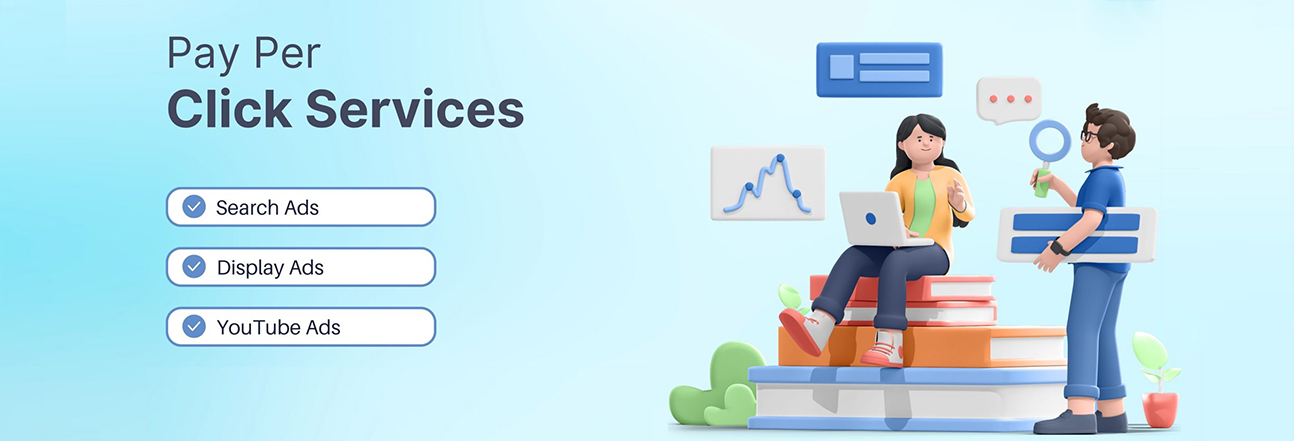
PPC
Pay Per Click
In today's digital age, online advertising has become a crucial component of marketing strategies for businesses of all sizes. Pay-per-click (PPC) advertising is a popular form of online advertising that can help businesses target specific audiences and increase brand visibility. PPC allows businesses to create ads that appear on search engines and social media platforms, with the advertiser only paying when a user clicks on the ad.

What is Pay-Per-Click (PPC)?
PPC or pay-per-click is a form of online advertising that allows advertisers to place ads on search engine results pages, social media platforms, and other websites. Advertisers only pay when a user clicks on their ad. PPC advertising is typically done through popular advertising platforms like Google Ads, Bing Ads, and Facebook Ads.
Benefits of PPC Services
Targeted Advertising:
PPC advertising allows businesses to target specific audiences based on location, interests, and demographics. This targeting ensures that the ads are shown to the right people who are more likely to convert.
Cost-Effective:
PPC is a cost-effective advertising strategy as advertisers only pay when a user clicks on the ad. This ensures that businesses are not wasting money on advertising that is not generating any results.
Increased Brand Visibility:
PPC advertising helps businesses increase their brand visibility and awareness, as the ads are displayed on the first page of search engine results or on social media platforms.
Measurable Results:
PPC advertising provides businesses with measurable results, allowing them to track their return on investment (ROI) and adjust their advertising strategy accordingly.
Quick Results:
PPC advertising provides quick results, as ads can be created and launched within a matter of hours.
Things to Consider for PPC Advertising
Keyword Research:
Conduct thorough keyword research to ensure that the ads are targeted to the right audience.
Ad Copy:
Create compelling ad copy that highlights the unique selling points of the product or service being advertised.
Landing Pages:
Create landing pages that are relevant to the ad and provide users with a clear call to action.
Budget:
Set a budget for the advertising campaign to ensure that costs are controlled and ROI is maximized.
Ad Placement:
Choose the right ad placement to ensure that the ads are displayed to the right audience at the right time.
How to Get Maximum Results from PPC Advertising
Conduct A/B Testing:
Conduct A/B testing to determine which ads are generating the most clicks and conversions.
Monitor Analytics:
Monitor analytics to track the performance of the ads and adjust the advertising strategy accordingly.
Use Ad Extensions:
Use ad extensions to provide additional information and increase click-through rates.
Optimize Landing Pages:
Optimize landing pages to ensure that they are relevant to the ad and provide users with a clear call to action.
Continuously Refine Strategy:
Continuously refine the advertising strategy to ensure that it is generating maximum ROI.
PPC advertising is a powerful tool that can help businesses of all sizes increase their brand visibility, target specific audiences, and generate measurable results. By conducting thorough keyword research, creating compelling ad copy, and optimizing landing pages, businesses can maximize their ROI and achieve their advertising goals.


There are several types of PPC (pay-per-click) services that you can opt. Here are some of the most common types
- Search Advertising: This type of PPC involves placing ads on search engine results pages (SERPs) for specific keywords or phrases. When a user types in a relevant search query, your ad appears at the top or bottom of the page.
- Display Advertising: Display advertising involves placing ads on websites, blogs, or other digital platforms. These ads can be in the form of banners, videos, or other visual content, and they target specific demographics or interests.
- Social Media Advertising: Social media platforms such as Facebook, Instagram, and LinkedIn offer PPC advertising options to target specific audiences based on demographics, interests, or behaviors.
- Remarketing/Retargeting: This type of PPC advertising targets users who have previously visited your website or interacted with your brand online. By showing them ads based on their past behavior, you can encourage them to return and make a purchase.
- Shopping Advertising: This type of PPC involves displaying ads for specific products on search engine results pages or other websites. These ads include product images, pricing, and other details, making them especially effective for e-commerce businesses.
- Video Advertising: Video ads are a type of display advertising that appears before, during, or after video content on various digital platforms such as YouTube. Overall, the type of PPC service that a business uses will depend on their specific goals, target audience, and budget.





FAQ
( Frequently Asked Questions )


If you are looking to improve your business's online visibility and generate measurable results,
consider partnering with
The Social Cuppa, a leading PPC agency in London UK. Contact us today to learn more about our PPC services and how we can help you achieve your advertising goals.